Fashions লেবেলটি সহ পোস্টগুলি দেখানো হচ্ছে৷ সকল পোস্ট দেখান

Paris Fashion Week 2026: Best Looks That Dominated the Runways


Paris Fashion Week 2026: Best Looks That Dominated the Runways

Paris Fashion Week 2026 delivered a spectacular showcase of luxury fashion, designer innovation, and high-end runway creativity. As one of the most influential events in the global fashion industry, Paris Fashion Week continues to set the direction for premium apparel, luxury lifestyle trends, and designer fashion brands worldwide.

This season's collections highlighted a sophisticated blend of modern elegance, sustainable fashion initiatives, and cutting-edge craftsmanship. Leading luxury houses presented runway looks that are expected to influence fashion retail, luxury shopping trends, and fashion marketing strategies throughout 2026 and beyond.

Top Luxury Fashion Trends from Paris Fashion Week 2026:

1. Quiet Luxury Remains Dominant

Luxury brands embraced understated elegance with premium fabrics, expert tailoring, and timeless silhouettes. This growing trend reflects the increasing consumer demand for investment-worthy designer clothing that offers both sophistication and long-term value.

2. Power Tailoring Returns

Structured blazers, sharp shoulders, and modern suits became standout features across numerous collections. Power dressing continues to be a major trend among luxury consumers, business professionals, and fashion-forward executives.

3. Sustainable Luxury Fashion

Many designer brands showcased environmentally conscious materials and responsible production methods. Sustainable fashion remains one of the fastest-growing segments within the global luxury fashion market.

4. Futuristic Metallic Designs

Metallic fabrics, innovative textures, and technology-inspired aesthetics added a modern edge to runway presentations. These bold looks demonstrate the growing connection between fashion innovation and digital culture.

5. Romantic Haute Couture

Flowing silhouettes, delicate embroidery, lace detailing, and handcrafted embellishments highlighted the enduring appeal of haute couture craftsmanship. 

In the world of haute couture fashion, romantic designs represent the most artistic and emotionally expressive side of luxury clothing. Designers often use silk, chiffon, tulle, organza, and fine lace to create dream-like garments that highlight beauty, grace, and storytelling through fashion.

6. Luxury Consumer Market

The Luxury Consumer Market continues to evolve rapidly as affluent consumers seek premium products, exclusive experiences, and personalized services. From luxury fashion and designer accessories to high-end travel and luxury real estate, the global luxury market remains one of the most profitable sectors worldwide.

7. Fashion Investment Opportunities

Fashion Investment Opportunities refer to profitable avenues within the global fashion industry, including luxury fashion brands, designer apparel, sustainable fashion companies, fashion technology startups, premium retail businesses, and fashion ecommerce platforms. As consumer demand for luxury goods, digital fashion experiences, and sustainable products continues to grow, investors are increasingly exploring opportunities in high-growth fashion sectors. From luxury brand stocks and fashion-focused ETFs to collectible designer items and emerging fashion ventures, the fashion industry offers diverse investment potential for those seeking exposure to one of the world's most influential consumer markets.

8. Digital Fashion Marketing

Digital Fashion Marketing is the use of online platforms, social media, artificial intelligence, and data-driven strategies to promote fashion brands, luxury apparel, and designer collections. It focuses on increasing brand visibility, engaging target audiences, and driving sales through channels such as Instagram, TikTok, YouTube, Google Ads, influencer collaborations, and fashion ecommerce websites.

As the fashion industry becomes more competitive, Digital Fashion Marketing continues to be a high-growth area, offering strong opportunities for brand expansion, luxury consumer engagement, and online retail success.

9. Fashion Ecommerce

Fashion Ecommerce refers to the online buying and selling of clothing, accessories, footwear, and luxury fashion products through digital platforms. It includes fashion retail websites, mobile shopping apps, luxury brand online stores, and global marketplaces that connect consumers with both mass-market and high-end designer fashion.

As competition increases, success in fashion ecommerce depends on strong branding, SEO optimization, influencer marketing, and seamless user experience, making it one of the most important and fast-growing sectors in the global fashion industry.

Why Paris Fashion Week 2026 Matters

Paris Fashion Week is more than a fashion event—it serves as a powerful business platform that influences luxury retail, designer brand strategy, digital fashion marketing, and global consumer trends. Industry leaders, fashion investors, luxury retailers, and trend forecasters closely monitor runway collections to identify emerging opportunities within the premium fashion sector.

The Future of Luxury Fashion

The best looks from Paris Fashion Week 2026 revealed a future where sustainability, innovation, and timeless elegance coexist. As luxury brands continue adapting to changing consumer expectations, the focus remains on craftsmanship, exclusivity, and meaningful fashion experiences.

For fashion enthusiasts, luxury shoppers, and industry professionals alike, Paris Fashion Week 2026 provided valuable insight into the next generation of designer fashion and premium lifestyle trends.

Top Fashion Forecasting Tools


Top Fashion Forecasting Tools
"Discover the top fashion forecasting tools shaping the future of apparel, textiles, and retail. From trend analysis and consumer insights to color forecasting and market intelligence, these platforms help brands stay ahead of emerging fashion trends and make data-driven decisions."

Introduction

Fashion is one of the fastest-changing industries in the world. Trends emerge overnight and disappear just as quickly. To stay competitive, fashion brands, apparel manufacturers, textile companies, retailers, and designers rely on fashion forecasting tools to predict upcoming trends, consumer preferences, colors, fabrics, and market demands.

Fashion forecasting has evolved from traditional trend analysis to AI-powered platforms that use big data, social media insights, consumer behavior, and market intelligence to provide accurate predictions.

In this guide, we'll explore the top fashion forecasting tools in 2026 and how they help fashion businesses make smarter decisions, reduce risks, and increase profitability.

What Are Fashion Forecasting Tools?

Fashion forecasting tools are software platforms and market intelligence solutions that help fashion professionals predict future trends. These tools analyze data from:

  • Social media platforms
  • Consumer purchasing behavior
  • Runway shows
  • Fashion weeks
  • E-commerce platforms
  • Search engine trends
  • Street style photography
  • Global retail markets

The goal is to help brands identify trends before they become mainstream.

Why Fashion Forecasting Matters

Fashion forecasting helps businesses:

Reduce Inventory Risks

Brands can produce products that customers actually want, reducing unsold inventory.

Improve Product Development

Designers can create collections aligned with future market demands.

Increase Sales

Trend-driven products attract more customers and generate higher revenues.

Stay Ahead of Competitors

Early access to trend intelligence provides a competitive advantage.

Optimize Marketing Campaigns

Marketing teams can align content and promotions with upcoming consumer interests.

Top Fashion Forecasting Tools for 2026

1. WGSN

Best For:

Fashion brands, retailers, textile manufacturers, and designers.

WGSN is considered the global leader in fashion trend forecasting. It provides detailed insights into:

  • Color forecasting
  • Consumer behavior
  • Fashion trends
  • Retail intelligence
  • Beauty trends
  • Lifestyle forecasting

Key Features

  • Global trend analysis
  • Consumer insights
  • Market forecasting
  • Seasonal reports
  • AI-powered data analytics

Benefits

  • Highly accurate predictions
  • Industry-leading reputation
  • Comprehensive trend reports

2. Trends top

Best For:

Fashion designers and product development teams.

Trends top offers trend intelligence directly from fashion weeks, trade shows, retail analysis, and street style observations.

Key Features

  • Fashion trend forecasting
  • Color trend reports
  • Fabric trend insights
  • Retail analysis
  • Catwalk coverage

Benefits

  • Easy-to-understand reports
  • Affordable compared to enterprise solutions
  • Strong fashion-focused insights

3. Heuritech

Best For:

AI-driven fashion trend forecasting.

Heuritech uses artificial intelligence and image recognition technology to analyze millions of social media images.

Key Features

  • AI-powered trend prediction
  • Social media analytics
  • Consumer behavior tracking
  • Product demand forecasting
  • Visual trend recognition

Benefits

  • Real-time trend monitoring
  • Data-driven forecasting
  • Improved inventory planning

4. Edited

Best For:

Fashion retailers and e-commerce brands.

Edited combines market intelligence with pricing analytics and competitor monitoring.

Key Features

  • Competitor tracking
  • Pricing analysis
  • Product performance insights
  • Retail benchmarking
  • Inventory optimization

Benefits

  • Better merchandising decisions
  • Increased profitability
  • Strong retail intelligence

5. Fashion Snoops

Best For:

Creative teams and fashion innovators.

Fashion Snoops provides future-focused trend forecasting across multiple industries.

Key Features

  • Seasonal trend reports
  • Consumer insights
  • Color forecasting
  • Design inspiration
  • Sustainability forecasting

Benefits

  • Excellent visual content
  • Creative inspiration
  • Future consumer trend analysis

6. Trendalytics

Best For:

Digital fashion brands and marketers.

Trendalytics helps brands discover trends using search behavior, social engagement, and consumer demand data.

Key Features

  • Search trend analysis
  • Social media monitoring
  • Product demand forecasting
  • Consumer insights
  • Trend discovery tools

Benefits

  • Data-backed decisions
  • Strong marketing applications
  • Early trend detection

7. Stylumia

Best For:

Retail forecasting and merchandising.

Stylumia uses predictive analytics to forecast product demand and consumer preferences.

Key Features

  • Demand forecasting
  • Product performance prediction
  • Retail intelligence
  • Consumer analytics
  • Market insights

Benefits

8. Pantone Connect

Best For:

Color forecasting and color management.

Pantone is the global authority on color forecasting.

Key Features

  • Color trend reports
  • Digital color libraries
  • Design collaboration tools
  • Seasonal color forecasts

Benefits

  • Consistent color management
  • Global color standards
  • Fashion and textile applications

Emerging AI Fashion Forecasting Technologies

Artificial intelligence is transforming fashion forecasting through:

  • Machine learning algorithms
  • Predictive analytics
  • Visual recognition technology
  • Consumer sentiment analysis
  • Social listening platforms
  • Real-time market intelligence

AI can identify emerging trends months before they reach mainstream consumers.

How to Choose the Right Fashion Forecasting Tool

When selecting a forecasting platform, consider:

Business Size

Large brands may need enterprise-level solutions like WGSN, while startups may benefit from Trendstop or Trendalytics.

Budget

Forecasting tools vary significantly in pricing and subscription models.

Industry Focus

Some tools focus on fashion design, while others specialize in retail intelligence and merchandising.

Data Sources

Look for platforms that combine:

  • Social media data
  • Retail data
  • Consumer behavior insights
  • Search trends

Forecast Accuracy

Review case studies and success stories before investing.

Future of Fashion Forecasting

The future of fashion forecasting will be shaped by:

  • Artificial Intelligence
  • Big Data Analytics
  • Consumer Personalization
  • Sustainability Intelligence
  • Predictive Commerce
  • Digital Fashion and Virtual Apparel

Brands that embrace data-driven forecasting will have a significant advantage in an increasingly competitive market.

Conclusion

Fashion forecasting tools have become essential for modern fashion businesses. Whether you're a fashion designer, apparel manufacturer, retailer, textile professional, or e-commerce entrepreneur, using the right forecasting platform can improve decision-making, reduce risks, and boost profitability.

Industry leaders such as WGSN, Trendstop, Heuritech, Edited, Fashion Snoops, Trendalytics, Stylumia, and Pantone Connect continue to shape the future of trend forecasting through AI, consumer intelligence, and predictive analytics.

Investing in fashion forecasting technology today can help your business stay ahead of tomorrow's trends.

FAQ

What is the best fashion forecasting tool?

WGSN is widely considered the most comprehensive fashion forecasting platform worldwide.

Are fashion forecasting tools accurate?

Modern AI-powered forecasting tools can achieve high accuracy by analyzing millions of data points from social media, retail sales, and consumer behavior.

Can small fashion brands use forecasting tools?

Yes. Many affordable forecasting platforms are available for startups, independent designers, and small fashion businesses.

How does AI improve fashion forecasting?

AI analyzes large volumes of data in real time, helping brands identify trends earlier and make more accurate predictions.

Streetwear Fashion Guide 2026


Streetwear Fashion Guide 2026
Fabric is the product in 2026. Stiff, structured 400 GSM luxury cotton with clean, tonal embroidery.

The streetwear landscape has officially grown up. In 2026, the culture has shifted away from cheap, logo-heavy screen prints and hyper-limited "hype drops." Instead, today’s market is completely dominated by premium construction, intentional silhouettes, high-GSM fabrics, and functional utility.

Whether you are looking to upgrade your personal wardrobe or sourcing inventory for your own premium direct-to-consumer (DTC) apparel brand, this definitive guide breaks down exactly what is defining street fashion this year.

1. The Core Fabrics & Fit (High-CPC Commercial Sourcing)

In 2026, fabric is the product. Consumers are looking at structural integrity and weight before they even look at a graphic design. If you are sourcing blanks or buying premium pieces, these are the industry standards to look for:

  • 300 GSM Blank Hoodies: Heavier is officially better. Luxury streetwear relies on 300 to 400 GSM (grams per square meter) 100% cotton fleeces that retain their stiff, structured shape after dozens of washes.

  • Oversized Heavyweight T-Shirts (240-280 GSM): The standard 150 GSM t-shirt is dead. 2026 streetwear demands thick, drop-shoulder silhouettes that fall away from the body rather than clinging to it.

  • Drop-Shoulder Proportions: A genuine streetwear aesthetic requires specific pattern grading. The sleeve seam must sit low on the arm, creating a boxy, relaxed upper body without looking sloppy.

  • Tonal Embroidery Over Loud Prints: "Quiet luxury" has deeply influenced streetwear. Brands are opting for subtle, same-color embroidery and hidden quality details over giant, neon chest logos.

2. Top Streetwear Trends Dominating 2026

Streetwear this year relies on a fusion of heavy-duty utility and nostalgic styling. If you want to stay ahead of the curve, these are the key trends to invest in:

  • Gorpcore & Tech Wear Infusions: Weather-resistant, functional materials are leading the pack. Look for outerwear featuring Gore-Tex technology, matte nylon finishes, and heat-sensitive interactive fabrics that shift color based on temperature.

  • Heavy Duty Cargo Pants: The utility trend refuses to die. In 2026, cargo pants feature wider legs, adjustable bungee hems, and discrete, streamlined pockets rather than bulky, bulging side pouches.

  • Y2K Meets 2010s Nostalgia: The fashion cycle has officially moved into the early 2010s revival. Think structured denim-on-denim coordinates, preppy polo collars mixed with oversized fits, and the massive resurgence of mechanical footwear tech like Nike Shox.

  • Streetwear Casuals for Women: Women's streetwear has evolved far beyond just buying smaller men's sizes. Crop-cut heavy tees, fluid batwing silhouettes, and high-waisted utility cargo skirts are dominating the female streetwear market.

3. How to Style the 2026 Streetwear Aesthetic

Nailing the modern streetwear look requires a careful balance of visual weight. Because fits are looser and heavier, structure is your best friend.

The Proportional Style Guide

Piece CategoryHow to Wear It in 2026Style Tip
TopsBoxy, cropped, or extreme oversized drop-shoulder.If your top is massively oversized, keep your pants structured or slightly tapered at the shoe to avoid looking swallowed by fabric.
BottomsRelaxed-fit cargos, wide-leg raw denim, or utility skirts.Use earthy tones (olive green, espresso, charcoal) or matte black to keep the look grounded and premium.
FootwearChunky retro runners, technical trail shoes, or clean vintage leather trainers.Your footwear must match the visual weight of your pants. Wide-leg cargos require a chunkier shoe so the hem doesn't drag completely.

Pro-Tip for Brand Owners and Exporters:

If you are launching a collection or looking for high-margin drop shipping segments, focus on a single "hero product" instead of a massive line. A perfectly patterned, heavy-wash, low-MOQ (Minimum Order Quantity) vintage hoodie is far more profitable than five subpar graphic tees.

4. Essential Streetwear Wardrobe Checklist

Ready to refresh your style or stock your digital shelves? Ensure these foundational pieces are present:

  • [ ] Vintage Wash Hoodies: Acid-washed or pigment-dyed finishes that offer a worn-in, luxury thrift feel.

  • [ ] Earth-Toned Cargos: Olive green, mustard, and stone gray are outperforming classic camo patterns.

  • [ ] Minimalist Crossbody Accessories: Small, highly technical chest rigs or sleek nylon sling bags to tie the outfit together.

  • [ ] Thick-Ribbed Collar Tees: A tight, mock-neck style collar that doesn't stretch out or sag over time.

Latest Technology Trends in Apparel Industry


Latest Technology Trends in Apparel Industry
Emerging technologies are reshaping the apparel industry with innovation, automation, and digital transformation.

Introduction

In the 21st century, it is impossible to deny the impact of technology on our daily lives and lifestyle. Every business domain and model has been influenced by rapid technological advancement, and the fashion industry is no exception.

Today, many well-known and global fashion brands are actively using technology to gain a competitive advantage and improve their performance in the market. As a result, custom software development has become one of the latest trends in the fashion industry.

Fashion companies are increasingly investing in customized websites, mobile applications, and digital platforms that help designers and brands build a strong online presence. These technologies enable fashion businesses to create a digital voice, connect directly with customers, and strengthen brand identity in an increasingly digital marketplace.

Technology Trends in Fashion Industry

1. Wearable Technology

Wearable technology is one of the most visible and rapidly growing trends in the fashion industry. It involves integrating advanced technologies such as sensors, multimedia systems, and wireless communication directly into clothing and accessories. This enables garments to interact with the user through gestures, body movements, and other intelligent control systems.

The main goal of wearable technology is to create smart, interactive, and functional clothing that goes beyond traditional fashion purposes. It represents the development of fully wearable intelligent devices that combine both style and technology.

Today, wearable technology is widely seen in products such as smartwatches, fitness trackers, and smart clothing. These devices not only enhance user experience but also provide real-time data on health, fitness, and daily activities, making them one of the most important innovations in modern fashion.

2. 3D Printing and Lasers

In today’s fashion industry, 3D printing technology is becoming increasingly important in the design and development of clothing and footwear. It provides manufacturers with a major advantage by enabling rapid prototyping, allowing designs to be created, tested, and modified in real time. This process is far more efficient, precise, and cost-effective compared to traditional methods.

Modern 3D printing and laser technologies allow designers to produce customized fashion items quickly and with minimal effort. These tools also reduce material waste and improve production accuracy, making the manufacturing process more sustainable and innovative.

In addition, advanced 3D design software enables virtual product visualization, visually impactful prints, and the creation of richly textured fabrics. This combination of digital design and manufacturing is transforming how fashion products are developed and delivered.

3. Internet of Things (IoT) for Fashion

The fashion industry has increasingly adopted the concept of the Internet of Things (IoT), where physical products are connected to digital systems through sensors and data networks. Around 70% of global retailers are now using IoT-based technologies to enhance customer experience and improve overall business performance.

One example is Nadi X yoga pants, which are embedded with sensors that guide users during yoga practice by tracking movement and posture. This demonstrates how clothing can become interactive and data-driven.

IoT-enabled fashion products allow retailers to collect real-time user data and provide highly personalized experiences for customers. As this technology continues to evolve, more smart and connected garments are expected to enter the market, transforming the future of the fashion industry.

4. Mobile Commerce for Fashion

Nowadays, smartphones are considered essential devices in daily life, and they have become one of the strongest drivers of e-commerce growth. In the fashion industry, mobile commerce (m-commerce) allows consumers to easily browse products, compare prices, and shop online from anywhere. Payments are also made digitally, making the process faster and more convenient.

In recent years, online shopping has become a preferred choice for many customers due to its convenience, time-saving nature, and ease of access. Customers no longer need to visit physical stores, as they can complete purchases within a few clicks.

Recognizing this shift, the fashion industry has increasingly focused on developing user-friendly mobile applications. These apps provide a smooth shopping experience, personalized recommendations, and secure payment options, helping brands connect directly with customers and boost online sales.

5. Blockchain

Blockchain is an important technology that improves transparency, traceability, and efficiency in supply chain management within the fashion industry. It provides a secure and decentralized system where information can be recorded and shared across multiple parties without the risk of data manipulation.

One of its key advantages is that it allows all stakeholders—such as suppliers, manufacturers, logistics providers, banks, and intermediaries—to stay connected within a single trusted network. Through this system, they can securely exchange information, documents, and transaction data in real time.

As a result, blockchain helps fashion brands improve supply chain visibility, reduce fraud, ensure product authenticity, and build greater trust between businesses and consumers.

6. 3D Scanning in the Apparel Industry

Finding the perfect fit is one of the biggest challenges for customers when shopping for clothes online. However, 3D scanning and virtual garment fitting technology are transforming this experience by improving accuracy and personalization.

Retailers expect this technology to significantly reduce product returns, which are often caused by incorrect sizing. By using advanced body scanning systems, fashion brands can better match garments to individual body measurements.

For example, TG3D Studio has developed a 3D body scanner that helps create a precise digital model of a user’s body. Customers can scan themselves through an app and then dress a virtual avatar with different garments to see how each item fits before making a purchase.

This innovation improves customer satisfaction, enhances online shopping confidence, and brings the fashion industry closer to fully personalized digital retail experiences.

7. Livestreaming and Social Media Intelligence

Today, social media platforms play a major role in shaping consumer behavior, and they generate a vast amount of data that fashion and luxury brands can use to gain insights and identify new sales opportunities.

Livestreaming has also become a powerful tool in the fashion industry, allowing brands to showcase new collections in real time, engage directly with customers, and drive instant purchases. This interactive format increases customer engagement and improves conversion rates.

A notable example is Heuritech, a Paris-based tech startup that uses artificial intelligence to provide advanced trend forecasting. The platform analyzes millions of images from social media to identify patterns, designs, and fashion elements that are gaining popularity among different consumer groups.

By processing this data, the software can predict fashion trends up to 12 months in advance, helping brands stay ahead of demand and make more informed design and marketing decisions.


8. Fashion Shows as Tech Events

Today, fashion shows are no longer just traditional runway presentations held in large venues. Instead, they have evolved into highly advanced technology-driven events designed to create memorable and immersive experiences for audiences.

Fashion brands now use technologies such as 3D projections, 360-degree viewing systems, augmented visuals, and interactive digital displays to enhance the runway experience. These innovations help create a more engaging and visually impressive presentation of collections.

In addition, custom-built software solutions are used to coordinate different elements of the show, including lighting systems, stage effects, fountains, background music, and other digital devices. This level of integration ensures smooth execution and a highly synchronized performance.

As a result, technology has become the core element in modern fashion shows, playing a key role in delivering impactful brand storytelling and ensuring the overall success of the event.

9. Beacons and Geo-Fencing for Fashion

The main objective of integrating beacon and geo-fencing technology in the fashion industry is to provide a more personalized and interactive shopping experience for customers.

Beacons are small wireless sensors installed in retail stores that connect with customers’ smartphones via Bluetooth. When a customer enters a store, these devices can automatically send notifications, offers, and promotional content directly to their mobile devices.

This technology helps fashion retailers deliver targeted marketing messages such as discount coupons, new product alerts, and special offers based on customer location and shopping behavior. For example, a customer entering a store may instantly receive a 15% discount coupon on their phone, encouraging immediate purchase.

Geo-fencing further enhances this capability by creating virtual boundaries around a store or location, allowing brands to engage potential customers even before they enter the retail space.

Overall, beacon and geo-fencing technologies are powerful tools for improving customer engagement, increasing store traffic, and boosting sales revenue in the fashion industry.

10. Mobile Enterprise Resource Management (ERP) for Fashion

The fashion industry is increasingly benefiting from Mobile Enterprise Resource Planning (ERP) applications, which help businesses manage operations more efficiently through real-time digital access. These systems provide live KPI dashboards, expense tracking, and other critical business information required to keep operations running smoothly.

In the fashion supply chain, areas such as vendor management, inventory control, and procurement play a crucial role. Any disruption in stock levels or miscommunication with suppliers can quickly lead to production delays and urgent operational challenges.

Mobile ERP systems help reduce these risks by centralizing data and improving communication across departments. With mobile access, managers can monitor inventory, track orders, manage suppliers, and review financial performance from anywhere at any time.

As a result, Mobile ERP solutions have become one of the most valuable custom technology tools in the fashion industry, enabling better coordination, faster decision-making, and more efficient business management.

Conclusion

It would not be wrong to say that the fashion industry has been significantly transformed by technology, just like many other industries. In the coming years, these emerging technology trends are expected to be widely adopted across the textile and fashion sector, paving the way for even more advanced innovations.

Both upcoming and established brands can upgrade their operations through web development solutions, mobile applications, and other digital technologies to strengthen their presence in the market.

As one of the largest industries in the world, generating an estimated $1.5 trillion annually, the fashion industry is set to experience a major shift in how it operates in the future. With continuous technological advancements, the industry will become more efficient, customer-focused, and data-driven.

Ultimately, these innovations will benefit both consumers and brands by reducing costs, improving shopping experiences, and increasing overall customer satisfaction.


Exploring Fabric Choices for Bridesmaid Dresses in 2026

Exploring the top bridesmaid dress fabrics of 2026—where flowing textures, rich materials, and thoughtful design come together.

As wedding trends evolve, the fabrics chosen for bridesmaid dresses continue to play a pivotal role in shaping both style and comfort. In 2026, the focus isn’t just on color and silhouette—fabric selection has become a defining element of bridal party styling. The material you choose sets the tone for your entire celebration, influences how comfortable your bridal party feels throughout the day, and impacts how cohesive and visually compelling your group looks in photos.

From airy chiffons and whimsical tulles to sleek satins and textured lace, each fabric carries its own personality and styling potential. With the rise of mixed-fabric groupings, sustainable textiles, and season-aware choices, brides and stylists alike are thinking more deeply about how materials enhance the aesthetic of the celebration—from outdoor ceremonies to elegant evening affairs.

In this guide, we break down the most popular fabric options for bridesmaid dresses in 2026, helping you choose the best fits for your wedding theme, venue, season, and individual bridal party needs.

Choosing the right fabric for bridesmaid dresses can make a big difference in comfort, look, and how the dress photographs on the wedding day. Here are a few polished versions of your paragraph, depending on the tone you want. All keep your original meaning but improve flow and impact:

Refined & Professional

Styling a bridal party goes beyond choosing the right color or silhouette—fabric plays a crucial role as well. The fabric selected for bridesmaid dresses can define the overall mood of the wedding, affect comfort throughout the day, and shape how cohesive the group appears in photographs. From airy, romantic chiffon to sleek, luxurious satin, each fabric brings its own character and styling possibilities.

Warm & Editorial (Blog-Style)

Styling a bridal party isn’t just about color palettes or dress shapes—fabric matters just as much. The right fabric can set the tone for the entire wedding, influence how comfortable your bridesmaids feel, and determine how beautifully the group comes together in photos. Whether it’s the soft movement of chiffon or the polished elegance of satin, every fabric tells its own style story.

Elegant & Fashion-Forward

When it comes to styling a bridal party, fabric choice is just as important as color and silhouette. The fabric of a bridesmaid dress can transform the wedding’s aesthetic, enhance comfort, and create a harmonious look on camera. From light, flowing chiffon to rich, glossy satin, each fabric offers a distinct personality and visual appeal.

1. Chiffon — Romantic & Lightweight

Chiffon is one of the most popular fabrics for bridesmaid dresses—and for good reason. This lightweight, semi-sheer material drapes effortlessly, creating a soft, romantic silhouette that flatters a wide range of body types. Its fluid movement adds elegance when walking or dancing, making chiffon an excellent choice for weddings with an outdoor, garden, or relaxed atmosphere.

Thanks to its breathable nature, chiffon is especially well-suited for spring and summer celebrations. It’s commonly used in flowing A-line gowns, wrap-style dresses, and softly pleated designs that prioritize comfort without compromising style. Many modern collections, including versatile options such as bridesmaid dresses by Azazie, feature chiffon for its wide range of colors and adaptable cuts—allowing each bridesmaid to feel confident and comfortable while maintaining a cohesive bridal party look. 


Why brides love it:
✨ Soft, ethereal, and flattering on many body types
✨ Great for flowy, floaty looks
✨ Ideal for outdoor or spring/summer weddings

Pros

  • Breathable and light — comfortable for warm weather

  • Drapes beautifully

  • Works with many silhouettes

Cons

Best for: Beach, garden, or boho-themed weddings

2. Satin — Elegant & Glamorous

Satin is synonymous with luxury and sophistication. With its smooth surface and subtle sheen, this fabric instantly elevates a bridesmaid’s look, making it a popular choice for formal or evening weddings. Structured satin gowns create clean lines and a polished silhouette, particularly well-suited to minimalist aesthetics and black-tie celebrations.

That said, satin is less forgiving than chiffon, as it tends to highlight curves, seams, and fit details. For the best results, high-quality satin and precise tailoring are essential. This fabric pairs especially well with rich, saturated hues—such as deep emerald, navy, or dramatic seasonal tones like burnt orange for fall weddings. When styled thoughtfully, satin delivers a timeless elegance that photographs beautifully and never goes out of style.

https://cdn.shopify.com/s/files/1/2053/3799/files/cabernet_catherine_satin_bridesmaid_dress_04.jpg.webp?v=1689172717

Classic choice for formal weddings that want a rich, luxurious sheen.

Pros

Cons

  • Can show undergarments/lines if too light

  • Tends to wrinkle and snag

  • Heavier than chiffon

Best for: Formal weddings, evening events, luxury venues


👗 3. Crepe — Sleek & Modern

https://dy9ihb9itgy3g.cloudfront.net/products/9181/y3113/y3113__ivory_d_f.740.webp

Why brides love it:
Smooth, matte finish with enough structure to flatter many silhouettes.

Pros

  • Elegant and drapes well

  • Less shiny — great for a modern minimalist look

  • Slight texture helps hide wrinkles

Cons

Best for: Classic, modern, or minimalist weddings

4. Organza — Light & Airy with Structure

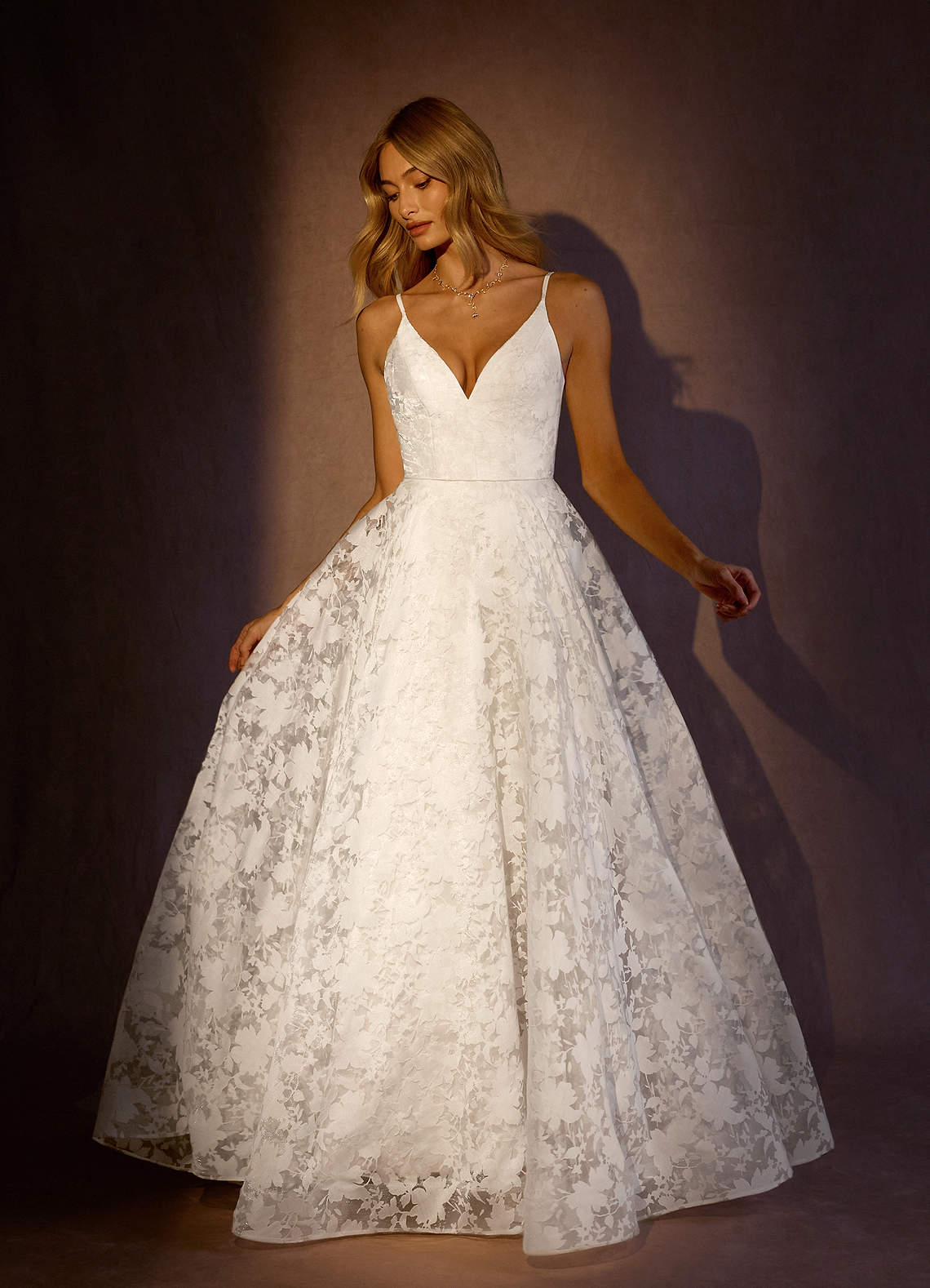
https://cdn-1.azazie.com/upimg/h65/da/ac/42869050c4f3f32bb10b538e16bddaac.jpg

Why brides love it:
Sheer like chiffon but with more body — great for tiered or structured styles.

Pros

  • Adds volume without weight

  • Structured look for ballgowns or A-line silhouettes

  • Beautiful layered effects

Cons

  • Can be crisp or scratchy

  • Shows wrinkles

  • Needs lining

Best for: Formal weddings, theatrical looks, dresses with volume

5. Tulle — Whimsical & Princess-Like

Why brides love it:
Soft, airy netting that creates fairytale silhouettes.

Pros

  • Adds volume and whimsy

  • Lightweight layers

  • Great for romantic themes

Cons

  • Can be itchy without proper lining

  • Not very structured alone

Best for: Romantic, whimsical, or fairytale weddings

6. Velvet — Luxurious & Warm

Why brides love it:
Deep, rich texture — a gorgeous option for cooler seasons.

Pros

  • Luxurious, soft, and textured

  • Holds shape well

  • Perfect for fall/winter weddings

Cons

  • Heavy and warm

  • Can show marks/fingerprints

  • Limited to certain themes

Best for: Fall or winter celebrations, formal venues

7. Jersey — Comfortable & Stretchy


Why brides love it:

Soft and forgiving — great if comfort is a priority.

Pros

  • Comfortable and stretchy

  • Flattering on different body shapes

  • Easy to move/dance in

Cons

  • More casual look

  • Not as structured

Best for: Casual or destination weddings

Tips for Choosing Fabric

Match to the Season

  • Warm weather: chiffon, tulle, lightweight crepe

  • Cool weather: velvet, heavier crepe, satin

Consider Color & Photography

  • Matte fabrics like crepe capture color deeply

  • Shiny fabrics like satin reflect light — great for evening photos

Comfort Matters

  • If dancing is on the agenda, choose breathable or stretchy fabrics.

Plan for Alterations
Some materials like chiffon are delicate and harder to alter — plan extra time/cost

Discover Beetled Linen: A Premium Sustainable Fabric Built to Last

Discover Beetled Linen A Premium Sustainable Fabric Built to Last
Beetled Linen – A timeless, sustainable fabric with exceptional durability and natural elegance.

Beetled linen is a premium type of linen fabric distinguished by a traditional mechanical finishing process called beetling.

Linen itself is made from flax (Linum usitatissimum) and is valued worldwide for being lightweight, breathable, highly absorbent, and quick-drying. Flax fibers are among the strongest natural bast fibers, which is why linen is widely used in shirting, suiting, curtains, upholstery, and even as a bio-based reinforcement material in composites.

What is the beetling process?

The beetling process is a traditional mechanical finishing technique used primarily on linen fabrics to enhance their appearance and durability without using chemicals.

How the beetling process works

The beetling process works by mechanically compressing linen fabric to improve its surface, strength, and appearance—without using chemicals. It is a slow, traditional finishing method that relies on controlled impact rather than coatings.

Step-by-step: How the beetling process works

After weaving, the linen fabric is thoroughly washed to remove natural impurities and finishes. It is then left slightly damp, which makes the flax fibers more flexible and responsive to mechanical action.

The damp fabric is tightly wrapped around a large cylindrical wooden beam. Even tension is maintained across the width to ensure uniform treatment. Blunt, flat-faced wooden hammers strike the fabric rhythmically as the beam slowly rotates. 

This pounding continues for many hours each day over several days or weeks, depending on the desired finish. The impact flattens the flax fibers and pushes them closer together. This increases surface density, smooths the fabric, and aligns the fibers without breaking them. As fibers become flatter and more uniform, they reflect light evenly, creating a soft, permanent sheen—achieved without any chemical agents. 

After beetling, the fabric is dried and stabilized. The compressed structure remains fixed, giving the linen its durable, smooth, and elegant character. Through controlled mechanical action alone, beetling transforms ordinary linen into beetled linen—denser, stronger, smoother, naturally lustrous, breathable, and long-lasting, while remaining fully sustainable and chemical-free. 

What beetling does to linen

What beetling does to linen can be best understood by looking at how it changes the fabric’s structure, surface, and performance—entirely through mechanical action.

Beetling pounds the linen with flat wooden hammers, forcing the flax fibers to lie flatter and closer together. This increases the fabric’s surface density without adding weight or chemicals. As the fibers are flattened, they reflect light more evenly. This produces a soft, permanent sheen that looks elegant and refined—unlike chemical or resin-based shine, it does not wash out. 

The compacted structure makes the fabric more resistant to abrasion, fraying, and wear, extending the life of garments and home textiles. Beetling reduces surface fuzz and irregularities, giving linen a smoother hand feel while retaining its natural character. By tightening the weave and aligning fibers, beetled linen gains a better drape and firmer body, making it ideal for tailored clothing and high-end furnishings. 

Despite the increased density, beetled linen retains its excellent airflow, moisture absorption, and quick-drying properties, since no pore-blocking finishes are applied. Because beetling relies solely on mechanical force, the fabric remains pure, eco-friendly, and skin-safe, appealing to sustainable and heritage textile markets. Beetling transforms linen into a denser, smoother, stronger, and naturally lustrous fabric, enhancing both its aesthetic appeal and functional performance—without compromising its sustainability or natural comfort.

Why beetling is unique

Beetling is unique because it enhances linen through purely mechanical craftsmanship, not chemistry, while delivering effects that modern finishes often imitate but cannot truly replicate.

Beetling relies only on wooden beams and blunt wooden hammers. No resins, starches, silicones, or synthetic coatings are added, keeping the linen completely natural and eco-friendly. The sheen created by beetling comes from flattened flax fibers reflecting light, not from surface coatings. This lustre is long-lasting and does not wash out

Instead of breaking or weakening fibers, beetling compresses and aligns them, improving abrasion resistance and fabric longevity. Unlike chemical finishes that can block pores, beetling maintains breathability, moisture absorption, and quick-drying properties.

Beetling is one of the oldest linen finishing methods, passed down through generations. Very few mills still practice it today, adding to its exclusivity and value. Because it uses no additives and minimal energy beyond mechanical motion, beetling aligns with modern sustainability goals and is suitable for sensitive skin.

The process creates a smooth surface, firm body, and elegant drape that is difficult to achieve through modern high-speed finishing techniques. Beetling is unique because it combines tradition, sustainability, durability, and natural beauty—producing a premium linen finish that is authentic, long-lasting, and environmentally responsible.

Because beetling is labor-intensive and time-consuming, beetled linen is considered a high-quality, heritage textile, often used in premium garments, table linens, and luxury home furnishings.

Why This Traditional Finish Creates a Superior Fabric for Your Wardrobe

This traditional finish creates a superior fabric for your wardrobe because it enhances linen’s natural qualities through craftsmanship rather than chemicals—resulting in garments that look better, feel better, and last longer.

Why beetled linen stands out for clothing

1. Natural elegance without artificial shine

The beetling process produces a soft, permanent lustre by flattening flax fibers. Unlike chemical finishes, this refined sheen does not fade with washing, keeping garments looking polished over time.

2. Exceptional durability for everyday wear

By compressing and aligning fibers, beetling increases abrasion resistance and fabric strength, making shirts, trousers, and dresses more resilient to frequent use.

3. Smooth comfort against the skin

Beetled linen has a smoother surface and reduced fuzz, which minimizes irritation while preserving linen’s breathable, airy feel—ideal for warm climates.

4. Better structure and drape

The denser surface gives garments improved shape retention and drape, allowing linen clothing to look tailored rather than overly wrinkled or limp.

5. Breathable and moisture-managing

Despite its refined finish, beetled linen retains excellent airflow, moisture absorption, and quick-drying performance, keeping you cool and comfortable all day.

6. Chemical-free and skin-safe

Because the finish is entirely mechanical, the fabric remains pure, eco-friendly, and suitable for sensitive skin, aligning with conscious wardrobe choices.

7. Timeless quality over fast fashion

Beetled linen reflects a heritage approach to textiles, offering long-lasting style and performance instead of short-lived, trend-driven finishes.

This traditional beetling finish transforms linen into a stronger, smoother, more elegant, and sustainable fabric—making it an ideal choice for a refined, comfortable, and enduring wardrobe.

Conclusion
Beetled linen stands out as a superior choice for your wardrobe because it perfectly balances durability, crisp structure, comfort, versatility, and sustainability. The traditional beetling finish enhances the natural strength and beauty of linen without the use of chemicals, ensuring long-lasting performance and a refined appearance. As a timeless investment fabric, beetled linen delivers a polished, sophisticated look suitable for both everyday wear and special occasions. If you seek a textile that combines practical functionality with natural elegance, beetled linen is an excellent choice.